Welcome Image Welcome Image Welcome Image Welcome Image Welcome Image

Do you still yearn for Abu Shoosheh?: Remembering the Nakba

Ba’dek bit-hinny la Abu Shoosheh?   'Do you still yearn for Abu Shoosheh?'

Las bak’od ‘ala trabha min ghair wala ishy, wala adalny laji fee hal bait fee Ramallah, Rayya replies after 63 years of exile from her home and village.

'I would rather sit with no possessions on Abu Shoosheh’s dirt than remain a refugee in my house in Ramallah.'

Losing 3 brothers within 2 months, Rayya and her remaining family were expelled from Abu Shoosheh in 1948, after weeks of shelling and attacks by the Haganah, the Jewish paramilitary forces that were later incorporated into the Israeli Defence Force.

Nakba commemorations recognise the catastrophe inflicted on Rayya and 700,000 Palestinian’s between late 1947 and early 1949 as the British Mandate came to an end, the State of Israel was formed, and Israeli forces fought to expel as many Palestinians as possible in order to claim as much territory as possible for the newly formed Jewish state.

UN General Assembly Resolution 181 proposed the division of Palestine into two states, an Arab state and a Jewish State. Acting in accordance with Plan Dalet, Jewish forces seized as much territory as possible in order to expand the borders of the Jewish state. Through terror and violence, Jewish forces drove Palestinians from their homes.

Whole villages such as Deir Yassin were massacred. Believing that the terror and the fighting were temporary and they would shortly be able to return to their homes, many families simply locked the front door of their homes and left family treasures, photos, memories and possessions. In Palestine, the leaving that was forced on so many families is also known as ayyam al-hijrah - the time of the exodus, or al-ahdaath - the days when the events took place.

The key, the ruins of an empty village and images of row upon row of tents under grey skies, all recall the loss, the grief and the death of those tragic days.

Homes that were left waiting for their owners to return, were instead confiscated under Israel’s newly-created Absentee Property Laws. Passed in 1950, the Absentee Laws gave the Israeli government the right to seize the homes and land of Palestinians without legal notification, redress or right to compensation.

Villages such as Abu Shoosheh, were emptied and deliberately destroyed in order to destroy the memory of those who lived there. Other villages were left to crumble as their former inhabitants were unable to return to claim even the smallest possessions.

Living in tents in squalid refugee camps, the 1950 video Sands of Sorrow is a poignant reminder of the Nakba and the reality that 64 years later, these places that were once home to rows of tents, are now permanent refugee camps in which Palestinian’s still live, denied the right to return to their homes, denied compensation, and denied the stability of resettlement.

The Nakba was a tragedy, a human catastrophe which is remembered and lived today.

Yet despite this tragedy, Palestinian’s like Rayya pass on the powerful and living memory of their connection to their land and home. For Rayya and others, rather than refugees they are muhajarin or naziheen and their loss is a condition that despite its length, can only ever be considered to be temporary. 

On May 15, the day on which the Nakba is commemorated, Palestinians also recognise and celebrate their lasting connection to their homeland, a connection that all Palestinians share together, regardless of where they live.

Rather than a tragedy that overwhelms and leaves no room for hope, our love of the land, the love which Rayya gives voice to, will ensure that we will continue in our homeland and will return to those places like Abu Shoosheh, that will always live in our hearts.

With My Warm Regards

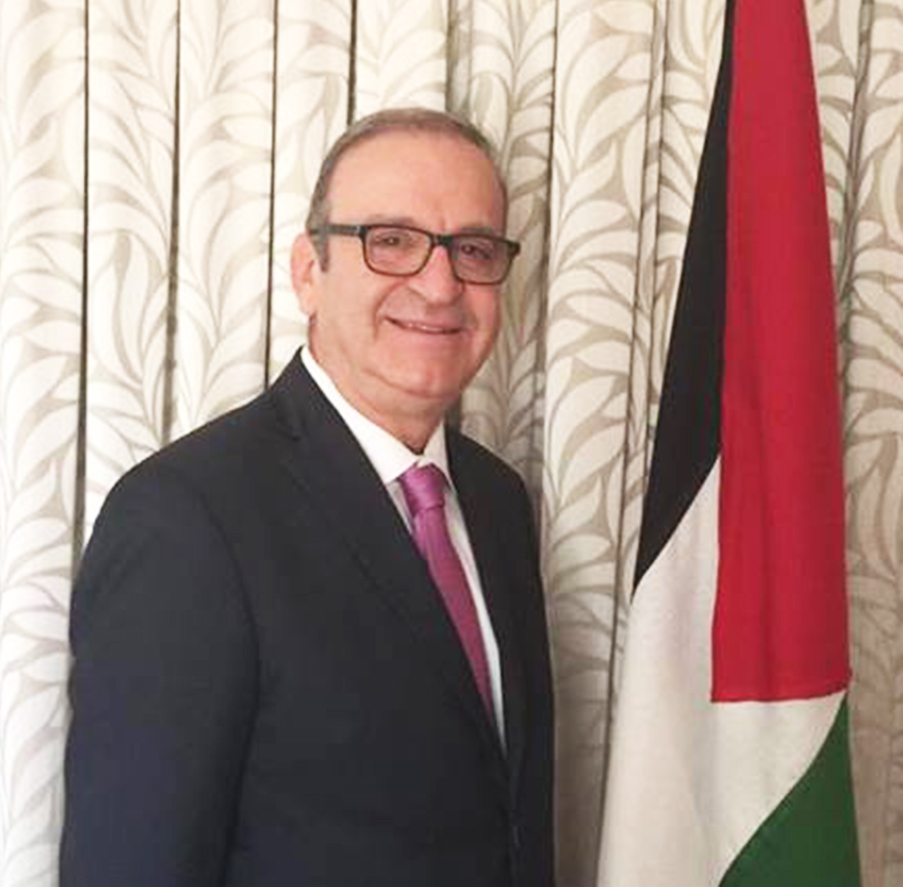
Izzat Abdulhadi
Ambassador and Head of the General Delegation of Palestine to Australia, New Zealand and the Pacific
May 2012

Highlights

Thumbnail

16 May 2012

EU castigates Israel over prisoners, settler extremism and property destruction

European Union foreign ministers have issued a harsh critique of Israel's growing pace of settlement-building, settler extremism,land theft, property destruction and ill-treatment of Palestinians

more »
Thumbnail

16 May 2012

Palestinian prisoners end hunger strike

Israel will end solitary confinement for all prisoners, allow around 400 prisoners from Gaza to receive family visits and will discuss improvements to prison conditions.

more »
Thumbnail

15 May 2012

Nakba: Then and Now

Nakba is about the loss of potential on a massive scale. The Nakba reduced a vibrant and highly accomplished culture into bitter-sweet memories. Entire villages were destroyed by Jewish-Israeli forces, then rebuilt and given Hebrew names. Books, music collections and works of art were left behind as their owners expected to return a few weeks later. Sports clubs and social organizations disappeared.

more »
Thumbnail

14 May 2012

Israel is warned as Palestinian hunger strikers near death

Peaceful demonstrations in the West Bank and Gaza in support of prisoners, are escalating. Two prisoners, who have refused food for 77 days, are thought to be close to death with another six in a critical condition.

more »
more highlights

Subscribe

Subscribe to receive our newsletter and stay up to date on important consular events.
Feature

Paths to a Just Peace

Visiting Adelaide, Ambassador Abdulhadi will participate in public dialogue at the Abraham Institute within the Hawke Centre at the University of Adelaide. Discussing just peace with Mr Meir Itzchaki Deputy Head of Mission at the Israeli Embassy in an event moderated by Dr Lynn Arnold AO CEO of Anglicare, Ambassador Abdulhadi will present accurate information on Palestine and Israel to a large public audience.

more »
Feature

Visit to South Australia

Ambassador Abdulhadi and Mrs Abdulhadi visited Adelaide, meeting with the Premier the Hon Jay Wetherill and Members of State and Federal Parliament. The Ambassador and Mrs Abdulhadi were given a tour of the Parliament House of South Australia by the President of the Legislative Council, the Hon Robert Sneath.

more »